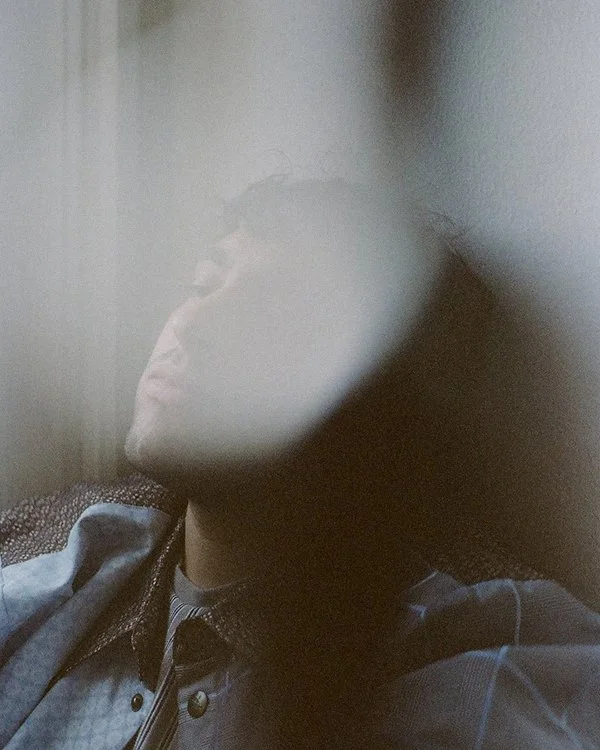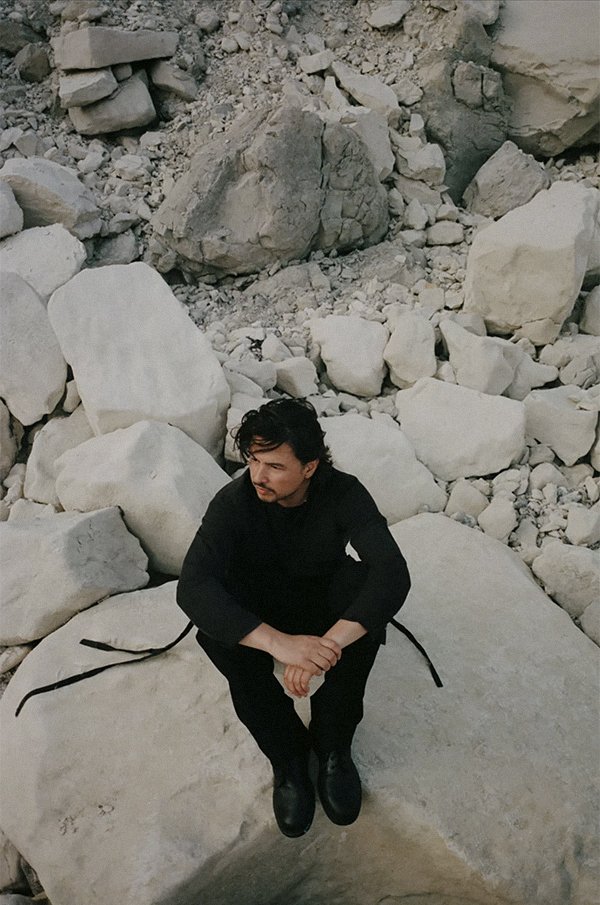
Talent Crush: Jamie Woon
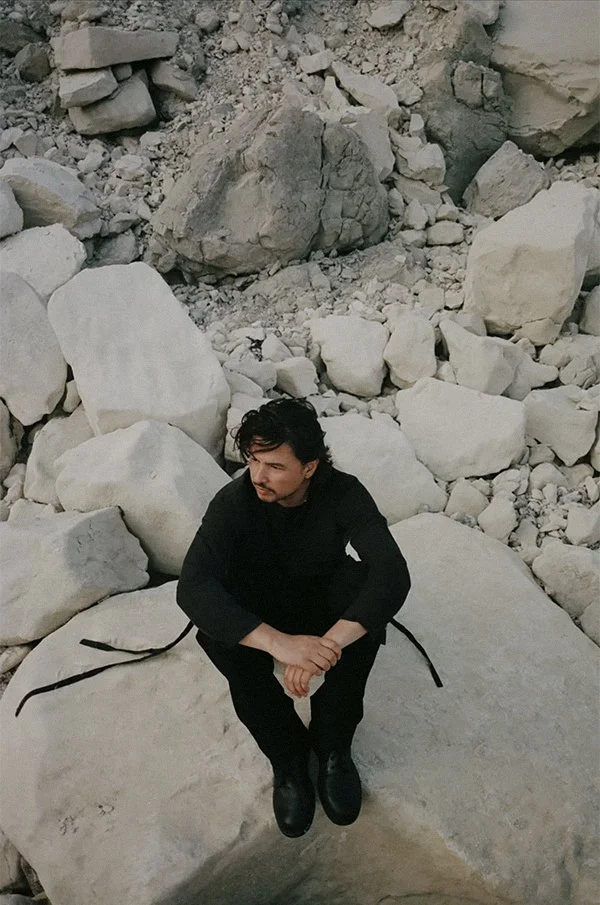
Jamie Woon’s distinct blend of alternative R&B, neo-soul and atmospheric electronica caught the audience’s attention with his debut EP Wayfaring Stranger (2007), followed by Burial-produced single Night Air and a subsequent studio album Mirrorwriting (2011). After getting widespread acclaim and being recognized by 2011 BBC’s Sound Of, he continued mixing singer-songwriting sensibilities with electronic textures, all the while stretching the capabilities of his unique sound even further in collaborations with Disclosure, BANKS, Portico Quartet, and other talent. In 2015, his sophomore album Making Time was released, followed by the Mercury Prize nomination and the unforeseen decade-long silence. On 03.10.25, exactly a year ago, Jamie made a long-awaited comeback with his new record 3, 10, Why, When. In one of her earlier interviews, Joni Mitchell said that being protective of her independency and the purity of her artistic expression in the world where everything is conformed to market cost her spending years without jurisdiction: “I don’t need no A&R man or producer – my music is between me and my music. I spent many years without a market according to the business. You need a very brave fan out there that will buy you in spite of the lack of marketing.” Decades later, and with a growing tension between financial survival and artistic freedom, the conversation continues.
JAMIE WOON: Hey, how are you doing?
KELLY KORZUN: Long time no see, right? It’s only been a week since our impromptu brunch in Warsaw, but it feels like it happened in another life. I’m excited about this new season of interviews, and it’s an honor to kick it off with yours. Also, I really appreciate all the beautiful things you’ve said about METAL & DVST last time we talked. The fact that you saw it for what it is, referring to it as a labor of love, means a lot to me. This decade-long labor of love journey started around the time you stepped away from the music industry, so it makes your comeback feel even more nostalgic. How was the rest of the tour?
JW: It was great. I’ve been really enjoying it so far, especially playing live with the band. It feels much less complicated now, very simple in a good way, which hasn’t always been the case in the past. There’s something special about returning to something you love after such a long time – it’s amazing to feel like I’m developing something again in the live arena and reconnecting with that part of myself.
KK: Sometimes the best thing you can do is to learn everything there is about a subject matter and then forget it overnight so that it doesn’t penetrate your conscious mind too much. A mind of a monk and a heart of a child, to quote one of your songs. The freedom that comes with unlearning and starting fresh is what keeps things exciting. The creative adult is the child who survived.
JW: Absolutely. I got to miss it, but also I got to forget that I was missing it.
KK: Spirits was the first tune I heard about 15 years ago, and, three LPs later, the theme of spirituality is still prevailing. There’s also this sense of deep connection with nature and its elements. Growing up in London, where do you think this relationship with nature began?
JW: Interesting. Growing up in the London suburbs, my relationship with nature began with going to the park I suppose, seeing the trees, the birds, but I think the reason why nature is often referenced in my music is because of my early introduction to folk music through my mother. Folk music connects you to the past, the present, to others around you, it’s very collective. Nature is what remained the same throughout evolution. The trees, the sea, the sky, all these words bring up a lot of other associations, they are the sources of our most potent symbols and metaphors, and because of that potency, these images can be almost boring, but I do feel it’s nice to use them sometimes because they don’t stick out too much and have this timeless quality.
KK: One of the things that I appreciate about nature is that it has cycles, and the older I get, the more I embrace the cyclical nature of everything in life, which oftentimes gets overlooked in the world where everything around us suggests that we always need to keep our dopamine level high. You and I grew up at a different time, with more time on our hands and way less distractions, and we had to find ways to occupy ourselves, to foster our innate curiosity, to go outside, to explore, to pick up a pen, a guitar, to do something with that slow-moving river of time. Nature helps you realize the importance of patience and slowing down – nothing in nature blooms all year. Connecting with nature reminds us how small we really are in the grand scheme of things.
JW: Yes, and you can get the same feeling in a lot of ways, in these small moments when you get surprised by life and people around you. In contrast to that dopamine culture, you can learn a lot about life just by trying to grow something yourself. You’ll see how much you can learn and feel, how embodied that feeling is, the real knowledge behind the process, all the things we don’t get to experience in the mechanized culture we live in.
KK: Many of the artists that inspired you as a musician carried that poetic quality in their lyrical content, artists like Joni Mitchell, Paul Simon, Peter Gabriel. It’s amazing that you’ve been able to preserve that lyrical DNA in your music to this day. The abstract nature of these potent images invites the audience to open the door to imagination, to fill in the blanks and give it their own meaning. Are there any other artists from that same formative period that you keep coming back to?
JW: One by-product of online culture is that the mechanism for discovering and listening to music has changed. The music that you get touched by when you’re a teenager is very important. Growing up in the 90s, in the height of the CD era, made me fall in love with the album form. Buying CDs regularly, but not too many, and swapping them with friends – that’s how I spent my money. Reading magazines was a part of that, it was a different critical culture as well, with a canon.
KK: Print publications dictated cultural relevance in music journalism at the time. Besides tv, it was the only way to get information about new releases. Do you remember the first CD you bought with your own money?
JW: Yes, I do. It was Michael Jackson’s Dangerous for Christmas, and then I bought Bad with some Christmas money.
KK: Solid choice.
JW: If you were a kid back in the 80s, Michael Jackson basically was music. I’ve always been drawn to songwriting, the album form, and musicianship. Music is endless. I love soul music of the 70s. To me, Stevie Wonder is the greatest of all time.
KK: What’s your favorite Stevie song? Please don’t hate me for this question, I know it's a tough one.
JW: It’s funny that once you answer that question once, you immediately think “oh, I need a different one now”. I think I’ll go with They Won’t Go When I Go on the Fulfillingness’ First Finale album.
KK: When I went to the Take 6 gig just a few months ago here in NYC, they did a rendition to Overjoyed, my favorite Stevie song. All that vocal layering in a live a cappella setting was out of this planet.
JW: I think if you wanna learn anything about contemporary music, it’s all there in Stevie Wonder’s catalog: jazz, soul, gospel, electronic, incredible harmony, technical exploration, generosity of spirit, activism. He found a way to make complex jazz harmony work in the form of a pop song. To me, Innervisions is the perfect album, front to back. That album is always there at the back of my mind. When I’m making music, I’d often ask myself how can I make it flow as good as Innervisions – maybe I’ll get there one day.
KK: When I listen to your albums, I can tell that you put a lot of thought into the track list and how things come together conceptually as a whole, which likely stems from your relationship with the CD culture.
JW: Being obsessed with the album form, it used to be a big part of my process, especially when I had a contract to make albums. Now that I don't, I'm unlearning some of that and adopting the mindset that not everything needs to always fall into a bigger piece.
KK: Back in the day, listening to a full album felt very natural. Are you still able to give your full attention to an album?
JW: Traveling is when I’m gonna get most into a full album, but when I’m home, it’s probably gonna take on a background feeling. Mostly I prefer to listen to the radio when I’m in the house – there’s an element of surprise.
KK: It’s funny how we always chase novelty. In the radio era, we wanted to have more control over what we listen to. The CDs came along, and then we gained even more control with streaming. Making choices felt exciting until it became exhausting. Radio culture in the UK has always been quite popular, but there’s definitely more and more people turning to radio stations these days, as well as other outlets where playlists are curated by real human beings. When I interviewed SOHN last year, he talked about you both being a part of the open mic scene in London before the MySpace era and everything that came with it. What’s your recollection of that time?
JW: That was a formative era circa 2006-2010, before I made my first album: putting on events, doing every possible open mic, playing my first gigs, burning CDs and selling those, having a PayPal, this whole indie music DIY era. It’s hard to top the excitement of that time and the simplicity of it. The energy of that time was really special and I loved being a part of the community. People like Toph (SOHN), who became a really dear friend, had already made three records independently by the time I met him. Discovering that I could write songs and that I could play and perform by myself was so empowering. I loved it.
KK: You were also using loop pedals, which is something not that many artists were doing at the time. I’m sure it was a smart addition to your setup as a one-man act.
JW: When I first saw someone use one, I knew exactly what I would do with it. When recording, I’d always stack my vocals anyways, so it was exciting to be able to use that texture live. Also, I loved electronic music, hip hop, drum n bass, dubstep. Doing loop stuff in combination with the guitar gave more contrast to my performances and broadened the appeal.
KK: Back then, did you see being signed by the label as the next step or you were leaning towards staying independent?
JW: My only goal in life at the time was to make an album, and I knew I could probably do it myself, but I didn’t really have a plan. I would meet people in the industry and they would tell me that my music is good, but I didn’t realize that you’re supposed to follow up with people. I was just bumbling along doing my stuff, and that era lasted for quite a long time. I think in the back of my mind I also knew that I wasn’t good enough of a songwriter yet to make an album I would be happy with, but I also knew that I didn’t want to get into the machine and write songs with professional songwriters. I loved being independent, and I thought that I could possibly make it work with the internet because I knew people who stayed very prolific and managed to do that. As I started getting into studios more and being around people who were very knowledgeable about the process, the nuances of music production, the costs, I started to realize that I’m not gonna be able to pull it off all by myself, especially considering that I didn’t want my first record to sound the way I sounded live at the time. Instinctually, I wanted my music to be something else. The first actual thing that I put out was on this charity label called LIVE Recordings. They asked if I’d be interested in putting out a 12-inch vinyl of Gravity, maybe a remix or something. This project was the official start of the non-demo catalog, and that’s when I got a loop station and started working on the Wayfaring Stranger EP.
KK: You also had Burial on that EP, and his career was absolutely exploding at the time. How did you guys meet?
JW: It was completely by chance and it did change my life. A mutual friend of ours, Georgina Cook, was one of the main photographers documenting the dubstep scene as it was happening, so she has an incredible archive of that time. One day I mentioned to her that I was working on this vinyl, and that the label said I should try to do a remix, and since I just got into Burial’s first album, I said that it would be a dream to get him on the record. She was like “he’s my mate and he loves male vocals, I’ll put you in touch.” We chatted on Myspace before meeting up in person, and he was extremely thoughtful and generous in the way he approached it. His music was really capturing people’s imagination at the time, and I felt very lucky to meet him in that time and space. It felt right because I wanted my record to sound different, and he inspired and encouraged me so much, but marketing that record became quite hard because of its strange vibe.
KK: When the record got that wave of attention from the record labels, how did you feel about this shift?
JW: In a way, and I realize it now, I had already A&R’d that record, I’d already done all the work of finding my sound. All major labels’ work comes down to taking something that has potential and growing it with investment – there’s not much development that goes beyond that for the most part. I remember thinking “ok, let’s go for it and see what happens, at least you’ll have resources to try things out.” Going from having no plan to succeed in the industry to all that attention felt like a success and a shock, and I took it quite hard. The world got bigger and scarier. All of a sudden, I had to have answers to questions I hadn’t asked myself when I was doing it all alone.
KK: There’s this notion that slow success builds character, fast success builds ego. Do you think this fast success got in the way of you seeing clearly where you wanted to go?
JW: A hundred percent, but I didn’t have a plan to begin with. Having a record in my hands was my only plan, I wasn’t thinking about the message, the marketing, I didn’t understand the business that well, how exhausting this whole cycle can get. By the time we had to master Mirrorwriting, I remember being completely drained, I felt like I was so done, but you’re not done, you’re literally just starting. Many great things happened during that time, many amazing experiences I’m grateful for, but I was really unhappy. On top of that, I was unhappy that I was unhappy, and I didn’t feel like I was allowed to be unhappy.
KK: Rick Rubin talked a lot about how lost and unhappy he felt when the Beastie Boys’ Licensed to Ill hit number one on the charts, which proves time and time again that the external success doesn’t mean anything, and, as you said, you don’t even feel like you can fully own your emotions. Many of us romanticize success until we can clearly see its face. Labels might give you the resources, but not the resource many of the artists need after this initial wave of success, which is time.
JW: Exactly. Also, I wasn’t looking after myself at the time, I was drinking a lot. There was this aggressive part inside of me that was trying to grind this whole thing to a halt, so it all turned into this very oppositional thing where instead of collaborating with the label and expressing what I needed from them, I was constantly fighting the campaign and how it was presented. Then, essentially, I just stopped cooperating and went to China.
KK: How did this six-week long trip to China with the British council come about? It was a residency, right?
JW: It was the Musicians in Residence program with the British Council, which selects a handful of artists a year to work on projects around China. I'd done some solo travelling there a few years before and wanted to go back and make music. I lived in an apartment in Xi'an, and for the first time in my life I was living alone, which I really needed. My project was a Saturday night radio show on a state channel where they let me choose what to play for an hour, and that was the only deliverable. It was Lunar New Year, so things were slow. There was a street full of live music bars that mostly played covers, and I’d play a few times at this one bar that I liked. It was healthy to be somewhere so different from the capital cities where Western music is the dominant sound. Being among people who had no idea who David Bowie was made me realize how much I had been relying on being understood lyrically, and in the context of Western music. Those had become crutches in how I communicated with an audience.
KK: I think it’s the perfect example of one of those moments we’ve talked about earlier when we realize our smallness. As they say, the map is not the territory.
JW: Yes, absolutely. Isn't it called sonder? The complexity of each individual life. Speaking of China, I grew up with a story that I was half-Scottish, with an Irish flavor, and half-Chinese, with a Malaysian flavor. My father moved back to Malaysia when I was growing up, so I only had access to my heritage through food and spending holidays with him, but China is huge. My father likes to talk about Chinese-ness, and I'm glad because he taught me a lot and gave me a love for it, but meeting so many people around China who saw things differently than he did allowed me to start crafting my own story and loosen things a bit. I also got more interested in Asian philosophy, particularly Daoism. On this campaign I presented my name, Woon, written four different ways. Four ways of pointing at the same person, and Woon is not so far away from When. It felt like a funny way of nodding to any identity crisis.
KK: Did you have a vision for the following record at the time?
JW: When I came back from China, I started to get a vision for the second record. I wanted simplicity of instrumentation, a live rhythm section, and the musicians I loved front and center. And I wanted to ditch the laptop. Around then SOHN was getting his record mixed by Lexx near where I was living, and he invited me over because he needed a guitar for some last-minute changes. That's how I met Alex. He's a great mixing engineer and a god-like recordist, and we found common ground in things like D'Angelo records. I wanted something less digital and more organic, so we went in a direction that was very different from my laptop-based process.
KK: It looks like music-making is something that comes quite naturally to you, but when it comes to production and the rest of the album cycle, this is where it starts feeling taxing, and it didn’t get any easier with Making Time. Stepping away from the industry for a decade is a massive step, and it seems like it was a necessary and thought-through decision at the time.
JW: This tendency had become quite a problem, and I felt like I couldn’t go through the same cycle again if it’s taking that much out of me. Then the question turned more into why does this pattern keep happening and how do I go back to that curiosity about life. When you don’t know how to stop yourself from suffering and feeling bad, you end up doing more things that make you feel bad. I felt really trapped, like I had a split in my personality, so I started learning more about different therapeutic paradigms and spiritual practices. I’ve been introduced to some of them at a young age through my mum as she’s always been very interested in world religions, hypnotherapy and all sorts of modalities, but I hadn’t done any therapy myself. Learning about the mind, looking at my own history and examining my experiences was a huge shift, and self-discovery became more important to me than making music. I was still making music, but I already knew that I wasn't chasing being a big star. I trusted that curiosity and let it guide me, and I knew that I’d take time to do the next thing. My A&R team had changed, I didn’t have anyone calling from the label, even though I was still a part of it on paper, which took the pressure off and allowed me to spend time with myself and to create space, and the best way to create space at the time was to just go dark.
KK: That period of complete darkness, call it the shadow work, the hero’s journey, the dark night of the soul, makes you observe the death of your ego and start examining who you really are without it. The journey is dark and lonely, but it allows you to see things as they are and to grow on a soul level.
JW: That process requires clearing the space and finding courage to face things that feel taboo to you, things you don’t want to admit. Examining the context you grew up in, your values, the bargains you’ve made with yourself and whether they still serve you… all these questions lead to interesting and sometimes paradoxical insights, and there’s beauty in discovering these dualities.
KK: Being in the public eye is what makes this process extremely difficult. I was recently rewatching Anthony Bourdain’s interviews, and, to this day, there’s still plenty of people in the comments who don’t get why someone like him would take his own life. All they see is the seemingly perfect life he was living, but there’s so much depth beneath this shallow perception. We all suffer, and it’s important to honor the complexity of the world we live in, the duality of life, the yin and the yang, the light and the darkness.
JW: You can only come to this realization in your own time. Also, I do wonder if you can go too deep into yourself, to the point where it eventually becomes unproductive or circular.
KK: I’m also wondering if it’s possible to stretch yourself as an artist without going through these seasons of darkness. Practices like yin yoga teach you how to surrender to pain, how you can gradually ease into that discomfort until it becomes comfortable. Just like we can expand our physical tolerance, we can expand our mindset by reframing the way we think about suffering. Pain is inevitable, but we can come to terms with it and learn from it.
JW: I love what you said about never reaching the point where we’re absolutely pain-free. The paradox is that this pain is a gift, but that realization only comes when you sit with it for a long period of time, without trying to get rid of it.
KK: The only thing we have control over is our thoughts. If we’re not being careful, our mind can put us in a mental prison where a lot of our suffering is self-imposed.
JW: And you can see me circling a lot of that stuff in the record. “Now that I’ve begun, now I know pain is never done” in Pulling on a Thread, or “I want to show compassion to the ghost that’s living in here, only want to feel into the heart and listen in, add nothing extra” in Ghost. These are not exactly metaphors, but rather notes to self. This record has a documentary feel to it because I was trying to write my way around this process while I was still in it.
KK: How many years total did you end up working on that record?
JW: Probably around three, and I was still on Polydor Records while making it. They accepted the record, we mastered it, and because I didn't have a manager by the time I finished the record, I was told that I can't put it out without a manager. Finding a manager took a long time, and by the time I found one, the company restructured, that manager met the label, and I got dropped the next week. The mad thing about that record was switching from the initial context and how I thought I'd be releasing it to then going through a long process of exiting and releasing it independently. Getting dropped just a month before my daughter was born wasn't a part of the plan. Things were up in the air again, but I made a decision to put the record out quickly, and that's one reason why the title 3, 10, Why, When stuck. The 3rd of October, which was roughly six months away, looked realistic as a release date, so we went for it, and it gave it a sense of urgency.
KK: Given the personal context of that record, maybe it was meant to be. When you’re going on all these morning shows to promote the record, you still need to package the story behind it into something digestible for the audience, which perhaps wouldn’t allow you to be fully transparent about the self-discovery journey that led you to making it. Maybe it was meant to go into the world and just be. Maybe you were meant to “feel into the heart and listen in, add nothing extra” and let the record speak on your behalf.
JW: Also, you don’t know the full extent of what the record means until people hear it, your experience of playing it, all of that. Ultimately, I was relieved to get dropped, and I was relieved that the record could come out the way it did. If I had to go through that machine and the pressure of commercial success again, I think I would’ve really struggled the same way I did before.
KK: Whenever one of your tracks would come up on my playlist in recent years, I’d always find myself wondering where you’re at in your creative journey and hoping that the pause you took was just temporary. When I was at your Paris show, I remember shouting out “Jamie, we love you!” right after the opening track just as a reminder of how much your music still means to your fans, myself included, and also given it was the first show in your European tour. I can only imagine the spectrum of emotions you felt that night.
JW: It was cool. UK had four shows in a row, and then the first one outside of the UK was Paris. When you get out of your own country, you feel like a slightly different person, like you’re representing something now. It felt like most of the people in the audience were people who knew my music in the past. I was really touched by that. I’ve been doing these tours sober, and I made a pact with myself that I wanna be fully present for all of this, enjoy the experience of playing with my friends, the process of doing the set, and stand behind the music as much as I can, which used to be a bit of a problem for me. Things are much less complicated now, it’s more DIY, just like in the old days. It also made me appreciate that now that I have three albums, my ability to gig doesn’t necessarily depend on my latest work. Being an older artist now, you can tell stories using everything you have and exploring new ways of doing that. Being out of that major label context has helped the touring experience.
KK: The perception of some material can get tarnished because of its association with a specific time in a musician’s life, and some artists deliberately exclude it from their set list. Is there any material that feels less relevant now?
JW: I think you rediscover them through musical maturity, things like arrangement, pacing, and how songs flow into each other. In the past, I used to operate under more artificial rules whereas now I just want it to feel generous and cover the songs people genuinely care about. The connection with the audience has been great. It’s fun to be surprised by an old song that you haven’t played in a long time, and on my solo tour next month I’ll be able to mix it up even more, go back to the start – a full circle.
KK: Sometimes revisiting your old material can feel even more fulfilling than working on a new one. There’s this interview with Billy Joel where he said that he defines music as the manipulation of sound, that sometimes the voice is more important than the lyrics, sometimes the lyrics are more important than the vocals or the music, and sometimes the music alone is sufficient enough on its own. What kind of manipulation of sound are you currently most excited about exploring in your music?
JW: I’m getting into drum machines and microphones at the moment. I’ve always loved drum machines and grooveboxes, and I bought one of those old ones that used to come with the 70s organ sounds and different latin rhythms on them. It has its own analog soul to it, and it’s fun to play with preloaded beats and mix things up within a fixed palette. Microphones are something I’ve never got very into because I usually recorded my vocals in other people’s studios, but I made a space in my garden this summer, and I’m really excited to experiment with playing music and recording vocals in that setting. Bringing live music into the recorded domain is really fun, and you can express things more intentionally with various placements of the microphones.
KK: The only issue with the microphones is that the good ones cost a fortune.
JW: Exactly. But you can use shitty ones as well. It’s quite fun.
KK: Especially if you’re going for a lo-fi sound, but I think it’s always worth experimenting with all kinds of tools because you never know when you can discover a happy mistake. On the note of experimentation, I’m curious what you think about the intersection of music and tech today. Bully by Kanye West was perhaps the first big record of the AI era that forced fans to question its development and think anew about what it is exactly that makes music sound artificial. The backlash AI-powered vocals are getting now reminds me of the auto-tune debate back in the day.
JW: I’m into tech and always have been. I think AI in general is impressive and can be quite interesting, especially in terms of studying consciousness and what it is. The term itself and what exactly we’re calling AI can be misleading. When it comes to AI music specifically, I’ve never been interested in using it, and I haven’t yet heard anything that would inspire me to use it. So far, I believe I haven’t been fooled by any AI music, especially if it had vocals in it. AI can only reference things that already exist, so, at best, it’s creating more and more sophisticated copies.
KK: But also one of the most exciting things about making music is putting the puzzle together. Starting with a lyric, a fragment, an idea, and then developing it into something bigger, and a huge part of that process is surrendering to the unknown.
JW: Yes, not to mention the process of owning your sound, the joy of playing instruments and getting better at it. Prompting can feel meaningful, but it’s just a reflection of your own curiosity trained on a wide array of information. Maybe one day I’d think about a conceptual project where using AI would feel appropriate, but I’m sure it would be purely aesthetic.
KK: I think there’s a strong possibility that all that generic content will force us to become more innovative in our creative approach.
JW: Making music is about going through the process, it’s about living your own life. We usually create technology for convenience, we get excited for a little bit, but only until we realize what we’ve lost. It’s important to not let it accidentally rob you of the things you already like doing. I noticed that with streaming music, the convenience of it can really suck you in, and, before you know it, you’re not engaging with music the way you used to love engaging with it. It’s important to remember that you still have control over these things, that you can protect the things you love doing.
KK: There are so many perfect things that came out of imperfection. Any creative process is a sequence of intuitive choices, and many of these choices come from the unconscious place that’s impossible to analyze. We can create new worlds inside as long as we remain open, embrace the unknown, and let the curiosity lead the way. Is there anything you dream of these days?
JW: Life is really hard for a lot of people. You mentioned unnecessary suffering before, and I think that it could be amazing to use the technology available today to ease that suffering. Personally, it’s about being in alignment with where the current path is taking me and feeling infused by it. I’m enjoying the way things are going at the moment, but I don’t really know what’s happening past December. I’m hoping to leave myself some space to dream when I get back from touring. There’s a lot of amazing people and creativity around, and I wanna be a part of that. I’m dreaming of finding more of my people and being around endeavors that feel positive and aligned.
KK: At the beginning of last year, you became a father. We talked about parenthood when we last saw each other, and it’s definitely one of those things that make you put things into perspective. What kind of world do you want your daughter to live in?
JW: It’s a very deep question. Besides the bare minimum that we all hope for ourselves, I want her to live in a world where people are charitable to each other. I want her to be able to experience life and express herself in the way she wants to express herself. I don’t have any particular ambitions for her as a parent. I enjoy getting to know her and watching her personality gradually evolving and blooming as she grows. I hope she’s inspired by the world she lives in.
KK: There’ll be icicles and birthday clothes, and sometimes there’ll be sorrow (c)