In Conversation: Samora Pinderhughes
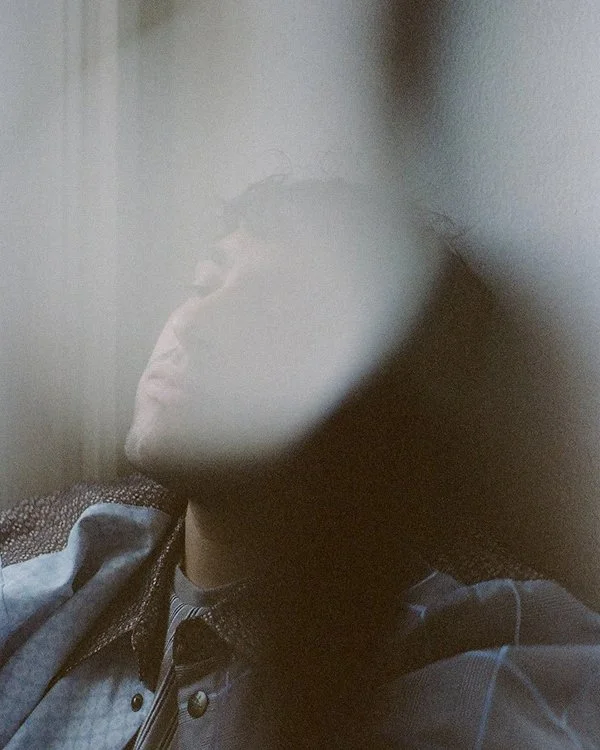
Samora Pinderhughes is a multidisciplinary artist, pianist, composer, vocalist, and activist addressing systemic socio-political issues such as racial injustice, incarceration, and violence. In 2014, he launched The Healing Project, an organization envisioning a world built around healing rather than punishment, with systems of violence being replaced with systems of care. Based on over 100 interviews exploring the effects of mass incarceration, the project has resulted in GRIEF, critically acclaimed 2022 release, accompanied by a digital archive and a multimedia exhibition. All art is political, and if I had to choose a single body of work embracing that statement, it would be GRIEF, one of the most vulnerable and beautifully unapologetic records of the last decade. Grief, the eponymous track off the album featuring Boom Bishop, one of Samora’s long-time collaborators, was referenced by Radiohead’s Ed O’Brien in his recent KEXP interview as one of the most important songs that guided him through a difficult time and inspired his upcoming solo album, Blue Morpho out May 22. During the Adobe Creative Residency at MoMA, Pinderhughes created immersive experience blending performance, installation, film, songcraft, and spoken word to facilitate community engagement and collective exchange. As I finished reading Faith, Hope, and Carnage by Nick Cave and Sean O’Hagan earlier this year, while preparing for this interview, I kept coming back to this passage: “Collective grief can bring extraordinary change, a kind of conversion of the spirit, and with it a great opportunity. We can seize this opportunity or squander it and let it pass by. I hope it is the former. I feel there’s a readiness for that, despite what we are led to believe. I have a hope that, in time, we can come together, even though, right now, we could not be further apart.” The root meaning of grief is “weight or gravity”, and it is heavy, but we don’t have to carry it alone.
KELLY KORZUN: We kept planning this conversation since January, and I cannot believe it’s almost the end of spring now. Aligning the schedules of two multidisciplinary artists involved in the community work is no joke. How you’ve been?
SAMORA PINDERHUGHES: Hanging in there, you know. There's always a lot going on, but everything is fine. How about you?
KK: Everything is good. Just came back from Europe, feeling both inspired and a bit weary. I can only imagine how exhausting the touring life of a musician is. Three countries in one week was quite a tour, but connecting with the creative community in real life and exchanging the energy is always worth the hustle. When I first started thinking about our conversation, I had such a hard time narrowing down all the questions I wanted to ask you as you are involved in so many projects and initiatives, so let’s go back all the way to the beginning – you’ll see why I wanna start there. My grandmother was actually born on the same day as you, September 4th.
SP: Oh, wow. That’s beautiful.
KK: She was born in Siberia, very far away from sunny California. She is responsible for my East Asian DNA, but, unfortunately, we lost her very early. She was a seamstress, and many of my clothes were made by her. I think there’s a picture of me where every single piece of my outfit is crocheted, even the hat. Like a true Virgo, she was extremely detail-oriented.
SP: The perfectionist type.
KK: That’s exactly why Virgos make great artists, but they can be extremely demanding. Sometimes I’m joking that being surrounded by Virgos my whole life has left me with a low-key PTSD. My daughter cries every time she hits the wrong note on the piano. The other day, Trixie Whitley and I were talking about the sacrifices we have to make as artists, and she asked me how do I feel about managing so many things at once while still catering to music and creativity, to which I replied: Well, it’s a choice. And she said: Is it? The point she made has stuck with me for days. Trixie and I both grew up in recording studios, with our fathers being Virgo guitarists. To a certain extent, we are marionettes dancing on the strings of our conditioning. Not to go down the free will rabbit hole as it’s a whole other conversation, but we are the product of our environment, whether we like it on not. It’s absolutely obvious to me that your empathy stems from the seeds your parents have planted in you and your sister very early on, the seeds that grew into the beautiful trees you both keep watering today. Was there anything specific about your parents that stood out to you in their lifestyle and how they showed up in the world?
SP: That’s an interesting subject. Growing up and watching them and their values had the cumulative effect on me, this living and breathing natural thing that I grew up with. Always having people staying at the house, whether for a day or a month at a time. Being a part of community organizing spaces, our parents would bring us there pretty young, so observing that environment on a regular basis was the biggest influence for me. The first place where I first learned to play music was La Peña Cultural Center in Berkeley where people learned about Caribbean and Latin American music. They had classes there that we would take, as well as fundraisers for certain political actions and all sorts of initiatives in the same space, and since our parents were a part of this community, we also became a part of it as kids.
KK: The consistency in the behavior of the people around us, what they believe in and how they treat others has the most direct impact on how we communicate with the world as adults. My relationship with the community did not begin with my parents, at least not in a direct way. Growing up as an only child and not having any siblings made me see all kids as brothers and sisters and treat them accordingly. My background was not particularly religious, but the empathy in me and the yearning to connect had a huge effect on my life. When you see the entire world as a community, you stop differentiating people by blood. Everyone’s child becomes your child, everyone’s grandparents become your grandparents, and I think this is the only way to live. If we treated everyone like that, the world would’ve been a better place.
SP: Indeed.
KK: Speaking of making the world a better place, The Healing Project has greatly contributed to it over the course of its existence. METAL & DVST and The Healing Project were both launched in 2014, and I remember that back then there wasn’t many initiatives, media outlets, or public figures examining complex social issues. The needle has definitely moved since then, especially since the pandemic, but we still have a long way to go, if you ask me. Research-wise, The Healing Project required a lot of heavy lifting, which I’m sure was both fulfilling and emotionally demanding. What made you interested in this specific topic?
SP: You know, I didn’t really choose that topic – it chose me. I grew up with a lot of people around me dealing with the carceral system. Both of my parents, speaking to their influence, worked on dealing with structural violence, both studying systemic violence, while trying to create alternatives. Even back when I was in college, I was thinking about what kind of role arts can play to tackle this and what are the ways in which we as musicians can contribute. I think a lot about the abolitionist movement and the abolition of the prison industrial complex from the context of it being a really strong way to deal with many different subjects because it’s like a container to address many issues from structural racism and racial capitalism to the environment to policing to surveillance to the courts, but from a very specific starting point.
KK: Back in the day, when you traveled across the country and interviewed the convicts, was there anyone else helping you out conducting interviews?
SP: My parents helped me in the beginning – mostly in terms of forming relationships. The initial group of people I’ve interviewed were either their personal connections or people they have worked with, but once I started going to different states and talking to people, I would meet them though all kinds of ways. Anna Deavere Smith, my mentor, was the inspiration for the interview-based techniques and the person who created that system. Once that got going, at least for the first five years of The Healing Project, the majority of the interviews I conducted myself. It was very solitary work, besides having conversations.
KK: Throughout my practice as an interviewer for both METAL & DVST and social projects, I’ve had many difficult conversations about all kinds of traumatic experiences, whether physical or emotional, or both. I’m sure the research you’ve done and all the stories you’ve heard came with a lot of emotional baggage. Were you taking care of your mental health at the time?
SP: To be honest, I wasn’t thinking about my well-being at the time, I was just following the work. It was definitely the case, the work was heavy, but, looking back, conversations were not the most difficult part. The topics were obviously difficult, but I had a lot of positive cathartic experience, I was really connecting with people, and, most of the time, people I've interviewed had very cathartic experience as well. The part that was challenging for me was that once you build a community, and since I wasn’t interested in the traditional documentary model, it comes with a certain responsibility, and that’s far more complex. Learning what that means and how to take care of this responsibility is an ongoing process. Communicating the limits and possibilities of what you can do is also important.
KK: The power you do have and the power you don’t have.
SP: Exactly. I’m not a lawyer, you know, so I wasn’t necessarily able to do all the things I’d like to do to get people out of the situations they were in, and I wanted it to be very clear. You don’t want to give people false promises when they’re dealing with real situations.
KK: Responsibility is the word I kept coming back to a lot this past year. There’s a lot of crazy stuff happening in the world right now, but I think that the only people who will survive in this chaos are the ones understanding the role of responsibility: towards ourselves, towards others, towards the craft. We all have the power that we can leverage to contribute to the greater good, and in simple acts, not necessarily in monumental gestures. There’s more and more non-profits and social initiatives launched by musicians. The other day I went to Endea Owens & The Cookout gig. The Community Cookout is the organization Endea launched during the pandemic that provides meals and music to underserved neighborhoods. I’m sure you’re having conversations in the creative community about promoting change. What are these conversations centered around these days?
SP: It’s a good question. To be honest, when I think about the communities I’m in conversation with about all these things, it’s not really musicians, but, also, I wouldn’t say that I do the best job in being a part of the music community. When it comes to the politics, the organizing, all these things you’re talking about, and as someone running an organization, I’m much more in contact with community organizations, people who are doing the things you’re talking about, but not from the artistic perspective. Their job is to organize people in a specific space, provide a service, get people to vote, these very tangible relationships in power building and politics to move the question from being an issue to trying to figure out the solution, and they are the people I find the most useful to be in conversations with. Something that’s quite tricky that I don’t think we’re very honest about in the arts and in the music in particular because it’s a popular art form that’s still so subject to the market, is that we have a very complex relationship to how much we want to be purely in the perspective of giving and how much our success depends on self-promotion. These are very selfish aspects, but we can’t make a living as musicians if we don’t invest in it, which can be very taxing, and it definitely affects what we choose to work on. When people are running organizations, their entire job is to give and to think about solutions – they have time to spend time, to think about solutions. When I think about who I’m in conversations with about all these things, it’s not musicians. However, it’s not a judgement call on whether people care or not – there’s just more answers in that place.
KK: Yeah, I know what you mean. “Just because you sing it, doesn’t mean you live it”, the lyric you posted a while back, says it all. Don’t get me wrong, it’s great that public figures are using their name to bring awareness to the causes they’re supporting, but, at the same time, the extent to which they are really involved in these things is very unclear. You, on the other hand, are extremely hands on, and, honestly, I don’t know how you manage to do community work on top of being a successful recording artist. I don’t know any other musicians who are as invested in both efforts as you are, and I really applaud you for that. This is not just a pretty facade – this is your life.
SP: Thank you. It means a lot.
KK: On top of that, you’re also getting your Harvard PhD. Given your schedule, you obviously saw value in adding this program to the mix. Is it all done or still in the process?
SP: Not quite done yet. Almost. I’m lucky to be in the program that professor Vijay Iyer created – it doesn’t exist anywhere else. The beauty of this program is that is was designed for practicing artists to engage deeply with scholarship in the way that informs their work directly, whereas in most programs you have to choose a certain lane that’s focused on making music or doing more traditional academia within a theoretical space. It was a new program designed for people who are deeply interested in research, but in an applicable way, and it was a good fit because I knew it would help the work that I’m doing, especially in terms of engaging with the larger systemic things. Even though I grew up in a household that certainly helped and encouraged education, there’s no substitute for spending real time with different sources of information and educators that know exactly what you’re trying to look for and can help you find it. This knowledge deeply informs the work that I do because it helps me to understand things from both historical and modern-day context and what performance really does. As musicians, we have this very abstract and spiritual understanding of performance and we have a sense of what music can do, but I don’t know how much we articulate it. Even if we try to explain the capacity the sound has and what we can do with it, it’s still difficult, but there are people studying that. Being a part of this program has been great, and I had nothing but a positive experience there.
KK: Especially considering that research is an integral component of creating any art. I know that you’re very anti AI, and I’m with you on that. We already live in the mental health pandemic, and today, more than ever, our main focus as a society should be on bringing people together and building communities. AI can be very efficient in certain applications, but, being efficient can also be detrimental. As human beings, we are not moved by efficiency – we’re moved by emotion and authenticity. Do you think it’s all downhill from here or that there’s gonna be some sort of Renaissance of arts and the pendulum will eventually swing in the opposite direction?
SP: You know, I always say that I’m never in the business of predicting the future because it’s so unpredictable, but even if you try, it’s either you say what you hope would happen or we’re using these future projections as a way to be resigned of the fact that things aren’t coming. I don’t know what the future holds, but my values are the same as yours, they are based on empathy and ethics, not on what’s coming or what’s in or out of fashion. Not sure if I’m super hopeful about the idea that people will come around and decide they want other types of experiences. I think that some people will be in response to what’s happening, some will want more connection, and some will be interested in expediency and comfort. More than anything, I think that AI, just like many technological projects, is tied to marketing because it’s great at convincing people they should build their lives around products, which has nothing to do with how useful the product is. With the bell curve of technology, we’re actually creating the things that are less and less lasting. Power is gonna do what it’s gonna do, but it has nothing to do with what I’m interested in. There’s always gonna be more new stuff, and people will justify using it, regardless of whether it’s ethical or not.
KK: To be honest, I think that the obsession with the idea of success is also to blame. If you’re pressured into being a successful product with a certain commercial performance, ethics isn’t something you put at the top of your priority list.
SP: To be clear, I do find myself to be very successful, but my success is not in relationship to the traditional mode of building success. Obviously, I could’ve made a choice of not being on social media at all, but I’m there. The market dictates the rules, and you need to make decisions. I am very ambitious and I wanna be successful, but there’s just things I don’t wanna do, and I don’t really care whether it’s an industry standard or not.
KK: In the long run, doing what feels right and aligns with your values is the healthiest way to go. There’s also freedom in not following a certain formula, and even the way you refer to the music you make as creative improvised music vs jazz is a good example of the boundaries we as artists can deliberately set. People can be very divisive in the creative community, and jazz is one of the genres people get extremely sensitive about, especially here in the States. Wynton Marsalis talks a lot about jazzocracy, social change through music, but not everyone sees the connection between social activism and music. Music is supposed to be marching to the rhythm of life by reflecting what’s going on in society, otherwise it’s gonna start stagnating. It’s a call and response, which is what your eponymous MoMa show was all about. We Welcome the Moments When Our Questions Have Not (Yet) Found Answers, one-of-a-kind performance where you invited the audience on an intimate journey alongside a diverse group of collaborators, including poets Daniel J. Watts, Mahogany L. Browne, and Joél Leon. It was a small space, small audience, people you’re pretty close with. I remember that I was supposed to be in LA on that day and had to cancel the trip because of the event, but everything I experienced that night was worth changing plans. What made you choose this specific group of collaborators to speak the truth through their voices?
SP: It’s interesting that we had a conversation earlier when you were asking about being in conversation with artists, and those are the artists I’m in conversation with. These artists have very deep artistic practices, I like their craft as writers, and, just like me, they are involved in the community, they are running big initiatives, making meaningful large-scale work in addressing important topics. When I was considering people for this MoMA show, I was thinking about the artists I admire the most. They are the epitome of the kind of artists we need.
KK: How did you initially connect with them? Through the creative community?
SP: No, they all are actually personal relationships, through friends of friends of mine. You know, you hang out with people and then they happen to naturally introduce you to more people.
KK: Explains that family-like, warm atmosphere that you all created. That show reflected the collaborative nature of your music practice and the sonic experimentation that naturally emerges from it, which brings us to Black Spring mixtape, an eclectic blend of lyrical tunes, neo-soul, spoken word, and contemporary electronic production. With the mixtape format stemming from the hip-hop culture, but also you growing up the Bay Area, I’m wondering what role did hip-hop play in your early years?
SP: That’s a great question. Obviously, being from the West Coast, the big one for me was 2Pac. He didn’t make any mixtapes, but from the hip-hop perspective, he’s the greatest of all time. He’s the biggest influence on me in every way, and he was my entryway for getting into rap music. When I was in high school, the biggest artist in the world was Lil Wayne – he had a hugely successful mixtape brand, so my introduction to mixtapes was through Wayne.
KK: Obviously, today we have all sorts of platforms to share music, but for me, growing up in the 90s as an only kid and being surrounded by a huge collection of books, cassettes, and later CDs, putting together a mixtape on my double-deck cassette player was not only the way to get busy, but also share my love for music with the people around me. Mixtape as a format still holds a special place in my heart, and I can see it working well within a specific context.
SP: In the modern context, the mixtape as a concept can be used for a lot of different reasons, but for me growing up, it would allow to mix the things you’re experimenting with or the things that are the most edgy in the catalog. With the mixtape, you don’t think about the project as a body of work like you would with an album. In addition to that, not only I’m coming from the mixtape culture, but also an album culture – I’m not a singles person. Every song on that album is telling a specific story, and within the mixtape format you can be much more adventurous in your stylistic choices, so it just felt appropriate for this project. The songs had a lot of thematic overlap, but, sonically, they were all over the map. I wouldn’t call it a record in a traditional sense, just something I wanted to say at the time, and the mixtape format made it possible to communicate these ideas cohesively.
KK: The mixtape was THE thing, especially in street culture, regardless of the genre and the subculture it was geared towards. We didn’t have influencers and curators back in the day, and it was the most feasible way to share your music taste with the community and to pull from more of an alternative catalog, as you said. You have such an interesting cadence as a vocalist, it’s unlike anything I’ve heard before. I’m curious how you landed on this specific style? The first time I heard your voice was on August Greene compilation album, and it really stood out to me back then, but when I listened to your solo material, that uniqueness became undeniable. The way you sing is so organic and fluid, it always amplifies and supports the narrative.
SP: I think it’s just an amalgamation of different influences, really. I didn’t grow up singing. I was mostly listening to songwriters, and it bled into the singing because I’ve never been formally trained as a vocalist, and taking on the identity of the vocalist is a relatively recent thing. At first, I was more interested in studying songwriting because I wanted to communicate a message. It was a very natural process.
KK: Wait, no one told you that you have a very unique vocal style?
SP: Not really. I mean, once I started singing publicly and working with people in the studio, they would encourage me to sing more. Obviously, once I started putting music out, I could tell that people were connecting with it. I think it resonates because it’s honest. I’m just basically talking.
KK: I think that’s exactly what makes it so unique – you were not trying to mimic anyone, you were just being yourself and channeling the music, being a vessel to it. We connect to the feeling, not the technique. Your performance at the Winter Jazz Fest this year alongside your sister was one of the highlights of the festival. The lineup was absolutely insane and featured some of your collaborators – Braxton Cook, Immanuel Wilkins, just to name a few. When it comes to collaboration, what are the things you’re looking for? I assume it’s important for you to be aligned with another human being in terms of values? Or maybe not?
SP: For me, it has to do with the craft. Not everything is supposed to be value-driven, but there’s certainly people I would not work with for ethical reasons. When it comes to collaborating with people, I need to respect their craft – that’s the most important thing.
KK: As a musician, you have a very distinctive brand. Not in a consumerist way, but rather because it’s also informed by your work at the intersection of art and activism. You have a very clear understanding and vision of who you are as an artist, and it likely serves as a filter because people who are not aligned with you, won’t probably even bother to reach out.
SP: It still happens sometimes, but there’s less and less offers lately that are diametrically opposed to what I believe in.
KK: Is there a preferred way of working, some type of a framework, or it fluctuates depending on the project?
SP: I have no method. It’s totally different every time, which is something I actually like because it keeps things interesting. When there’s multiple people involved, my process becomes a response to their process, it’s about being flexible and asking your collaborators how they wanna work, and then either something is happening, or it’s not.
KK: One of my friends who lives in Paris is a huge fan of yours, and I know that your show it definitely on his bucket list, so, hopefully, it will happen one day. As we were talking about your music, he asked me why I think you’re not as popular as you should be. It’s a complex subject, and the relationship between craft and commerce is a whole other conversation, but once you confirmed the interview, I thought that there’s no better person to answer that question than the man himself. I sure have a theory, but it would be interesting to hear yours.
SP: One thing that I think we as human beings need to be realistic and comfortable with is the element of chance in our lives. None of us can predict anything outside of the things we can control. I have no control over what happens to the work that I make and who wants to support the work that I do. There are people who are incredibly impactful vigorous artists who are successful, but timing is a big thing too. I think that we, especially in our technological age, really underrate time and our relationship to time as artists. Because we want to be recognized in the moment and because things are moving so quickly right now, it really encourages to base your career and your creative output on who responds to it in the most immediate sense. When we look back at civilizations, the only thing that’s left is the art, and that’s what I think about when judging my work. Of course, I do listen to contemporaries and to people who I was inspired by growing up, but my biggest inspirations are the people who were not alive when I was born. To me, their work is not a product. It doesn’t mean you don’t consider how it is produced, but if you want to be the biggest artist you can be, even if you mean well and you’re creative with the work, you still have to think about this aspect. I’m very conscious about the choice that I’ve made and I’m very happy with it, that I refuse to think of work as a product. It doesn’t mean that I’m not conscious that I’m selling it, or that I’m not promoting it, or not thinking deeply about how it goes into the world. I am very ambitious, but also very comfortable with the choice that I’ve made.
KK: There are also other areas besides music that are very present in your creative life.
SP: A lot of time that I could’ve spent on releasing and promoting the music is spent on doing the community work and engaging in the larger project that’s focused on how to leverage art to make the world the kind of world I wanna live in. That’s what I spend the majority of my time on, and it’s as important to me as making music. There’s filmmaking and a million things that I love, so I have to base my expectations on that as well. As you know, when you’re doing many things, you can’t expect the same results as the person doing just one.
KK: It’s an eternal dilemma of being a multidisciplinary artist. I absolutely get what you’re saying. There’s always a trade-off, and we need to be realistic about our expectations. Not seeing the work from the perspective of a product, but rather from the perspective of its legacy and what’s gonna extend beyond our existence, is healthy. The litmus test is the quality of the work you’re doing, the confidence you have in the work and in your taste.
SP: Absolutely. But it’s a positive thing because I know the quality of the work, and that when people do find it, they tend to connect with it. That’s how I judge it, and that’s the only thing that ultimately matters.
KK: It took us quite a while to finally connect since the beginning of the year. We’ve transitioned into spring, and this interview wraps up the season before METAL & DVST goes on a summer break, so I wanna close our interview with this quote by Albert Camus. “In the midst of winter, I found there was, within me, an invincible summer. And that makes me happy. For it says that no matter how hard the world pushes against me, within me, there’s something stronger, something better, pushing right back.” Thank you, Samora.
SP: Thank you, Kelly. And tell your friend we’ll be in Paris in June.