In Conversation: AUNCE
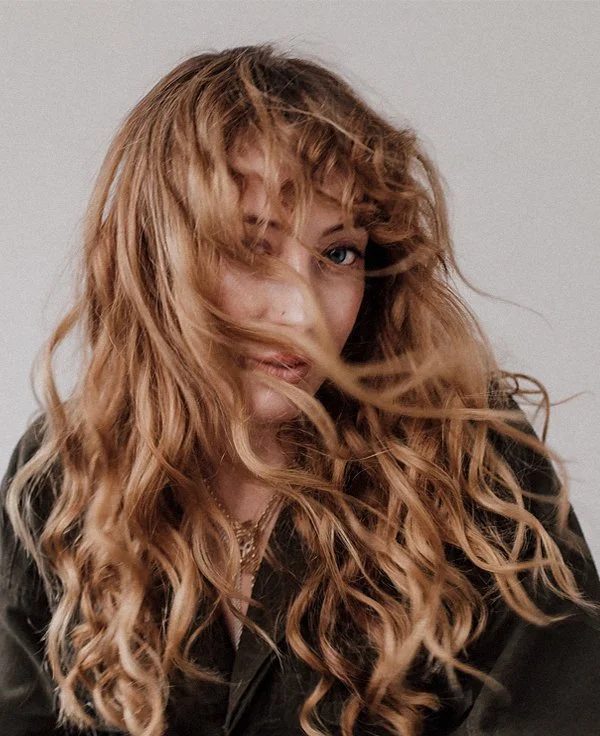
AUNCE (pronounced Aunts) is a UK-based vocalist, composer, and producer working across sound design, film, theater, and dance. Blurring the lines between genres, she paints evocative sonic landscapes by blending cutting-edge sound and introspective storytelling. After receiving well-deserved critical acclaim with her debut track Beep Beep, she continued exploring how contemporary sound can be pushed into and through abstraction, and then pushing it even further with Come Back, a deeply personal virtually wordless sonic statement taking listeners on the immersive journey of loss and healing. Jung once visited a monastery outside of Darjeeling where he discovered the mandala, a circular pattern considered a sacred geometry, an ancient visual mediation. Mandala is a symbol of wholeness, the totality of the universe and the self contained within its bounds, a mental image built up through an individual’s subconscious. He would invite his patients to fill in circular drawings, adding patterns and symbols as they come to mind. By creating your own mandala, you can gain access to your unconscious and bring buried emotions into meta-awareness and then awareness. These drawings are capable of speaking when our voice cannot. Loneliness does not come from having no people around you, but from being unable to communicate what seems important to you; it’s about carrying words you cannot say and truths you don’t feel safe to share. Healing is learning to speak what matters most so that you’re no longer alone with it. While the voice is a fundamental tool for one’s self-expression, an extension of one’s identity, that’s not all there is. If you couldn’t speak, would you be able to express your authentic voice? Would you be able to paint it, to engineer it, to dance it out? You know you would. Creativity is the answer, the inner voice we always find within.
KELLY KORZUN: When I did my 2025 recap, new followers were surprised that I do only a few interview features a year, which seems quite unorthodox for a media. This past year, I did five interviews total, with three of them in music: SOHN, Daoud, and Chris Hyson. After my post, Chris asked me what makes me land on a specific artist, and I said that it’s typically either someone I’ve been eyeing for a long time, or a newcomer with a sense of innovation in their craft and a strong point of view. I remember that I was in Paris when Came Back entered my orbit, and I kept listening to it on repeat. The pull was so strong that I dropped you a DM the same day, and only then I found out that you and Chris have collaborated in the past.
AUNCE: Your interview with Chris just came out that day. It’s such a beautiful piece – dynamic, colorful, with big topics mixed in with fun. It’s so rare to find a real far-reaching and deep conversation like that.
KK: Thank you. When we chatted earlier, you’ve casually mentioned that before coming back to the UK you lived in New Zealand for 15 years. How did this massive fling with New Zealand come about?
A: I was born in Birmingham. My parents met doing community work in social housing, and later moved to Midlands, this really unexotic part of the UK, the place you never wanna go to unless you’re changing trains. However, it’s a pretty and down-to-earth place, and I’m really grateful for being from there. I have very strong vivid memories of loving music from the age of four or five. We had peripatetic music teachers coming to school once a week, and I used to be so excited about these music classes. I remember sitting in a circle doing rhythmic games and loving it, and wanting to stop a music teacher before she leaves to hear her play piano and sing along, which was probably very annoying. Another really vivid memory of mine was this violinist coming from the Birmingham Symphony Orchestra to our not-so-fancy school in the middle of nowhere, and I remember sitting on a cold wooden floor and seeing music flowing through the players, through the violin and back, this beautiful figure 8 feeling of pure love. They were so committed in the moment, and I remember thinking to myself that I want that feeling. I wasn’t particularly good on the violin when I tried to learn it, but I’ve always loved singing. When I got a bit older, my mom used to take me and my brother to music concerts. She was very into folk music, while my dad was into heavy metal, so we had this very interesting juxtaposition. One day, we went to this amazing choral concert, which gave me a similar feeling to the one I had watching that violin performance at school, and I remember being completely in awe of the harmony between voices. When music touches you, your body responds in a very visceral way. Looking back, all these experiences make complete sense from where I’m at now. I’ve always loved singing, but I never knew if I was good at it, and because I didn’t realize that I had a pretty voice, I wouldn’t understand why the young girls would ostracize me when I would get a part in Alice in Wonderland. Now, I can see clearly what it was, but at the time I just wanted to hide and not stand out in any possible way because of all the shame I felt about it, which is kind of crazy.
KK: It’s something that I spotted in your early posts – sometimes you would write something extremely introspective and profound, but then wrap it up with LOL and emojis, which I think is linked to self-acceptance. We can say anything as long as we put the right emoji next to it, so many of us are using them as a crutch, but all our feelings and emotions are valid, and they are stirring in us for a reason. Feeling alienated is the price we have to pay for being authentic, but when we’re kids, we don’t understand why these things happen, so we make a mental note that authenticity equals trouble. This inability to truly own our feelings is what we continue dealing with as adults, and the biggest challenge is learning how to process the full spectrum of our emotions, especially negative ones, in the most ecological way.
A: You’re totally right, and sometimes it feels like you’ve come a long way, but then you realize that you’re repeating these defaulting patterns. In the last couple of years, I’ve made quite a progress in owning and expressing my emotions, but it’s a life-long journey, and we’re still interacting with the world that doesn’t like women to be in that power.
KK: We’ve come a long way, but many of us are still experiencing various degrees of gatekeeping. When did you start getting more serious about music?
A: In high school, when I started taking proper piano lessons and understanding notation, and then I decided to go to university to do music. Because I was following this feeling, I went to different universities and departments to see what the vibe was. The University of York was quite famous in the 70s for its experimental approach, a bit left-field, so I went there for an open day where all these students were putting on amazing performances of very interesting vocal stuff, and, after chatting with them, I felt like it was the place to be. Then I went through this major perfectionist era with lots of practicing, got addicted to exercise and became anorexic because of that – I just wanted to be everything. There was a lot of unrealized potential and ambition in me.
KK: When trying to explain why I ended up working across the entire creative spectrum as a multidisciplinary artist, I say: the world told me I’d be nothing, so I became everything. To be honest, I’ve never considered myself particularly ambitious, but I’ve always believed in my potential. There were a lot of people underestimating it, but it would only increase the drive in me and fuel my passion.
A: Unfortunately, I went a little too far down the perfectionist route, and at the university it manifested itself the most. In the 90s and 2000s, there was this super skinny trend, and I remember zoning in on my legs a lot, which is typical for body dysmorphia. When I was five or six, I was bullied by the boy who said that I have fat legs, which resulted in looking up to girls like Kate Moss, who had very straight legs with gaps, all that. These things penetrate our consciousness so early, when we soak everything as a sponge. I’ve realized all that through therapy and hypnotherapy. I met friends at the university who I’m still very close with, and I don’t think that going to the university to study music is always necessary, but it was the best place for me because the course was super experimental, self-guided, and it had a good pace to jump into different genres and philosophical ideas. It was a great place to grow up musically and personally, while being surrounded by talented people who were as obsessed with music as I was.
KK: Given what you’ve been going through at the time, I think being surrounded by a community is the best thing you could’ve done for yourself. A sense of belonging can be very therapeutic.
A: I was walking down to get lunch around campus with my friend Simon, and he said: Anna, I noticed that you’re exercising a lot. Can you imagine what would happen had you put the same amount of energy into practice? He was only 18, but he had this incredible ability to get to me like no one else, although I’m not sure if it’s healthy to replace one obsession with another.
KK: Some obsessions are healthier than others.
A: For sure. That shift in perspective made me dive deeper and really focus on my practice. Not that I wasn’t focused before, but this time I gave it my all by not trying to be perfect. I did a lot of choral singing, as well as contemporary vocal techniques, some jazz stuff – it was a good time. I had many extremely talented lecturers, including composer Ambrose Field and tenor John Potter who would combine the influence of medieval forms with the possibilities of live electronics. Reimagining traditional music and giving it new life was a big part of their approach, and I’m very grateful for having mentors like that. I didn’t get into production at that point yet, but I remember doing a solo project and working with a technician to produce an EP. The sound I was going for wasn’t happening, and one day I got to play with the tools and I just went with my instincts. I was like: shit, why didn’t I do it sooner? Then a job came up, and I jumped on the opportunity to become a choral scholar in New Zealand.
KK: Have you considered moving to London?
A: I’ve always loved London. I used to come there with my mom as a kid, and later, when I was at the university. When I was 20-21, I had the choice of going to London or traveling for a bit. I knew that if I went to London, I’d get sucked into work, so I decided to travel instead – it was just me knowing my modus operandi powered by these perfectionist tendencies. I still wonder every now and then how my life would turn out had I moved to London. On the other hand, New Zealand is where I discovered production, the place where I had time and space to become more grounded. Even though the country wasn’t culturally too different, it was far away and had this grounding energy, in addition to nature and down-to-earth no BS attitude. When I got to Wellington, I got involved in the theater (I’ve actually done theater as a kid) where I met a lot of beautiful creatives, and it kept me busy for a while. My boyfriend at the time was into production, and I was still in the mindset that I need a man to help me with production. When he introduced me to Ableton and encouraged to play with it, I really loved it, so I kept going with it, put some things up on Soundcloud and released an EP in 2013 under another moniker EDIE (my middle name). It got picked up by quite a few student radio stations, and I was really moved by all the support that I was getting.
KK: What made you move back after 15 years of uninterrupted wholesome creative experience?
A: Covid years combined with a breakup made me feel quite lonely and very far away from my family. I was finishing my PhD, and my partner at the time had a job in France, so it was just a combination of different factors, parents getting older, and me feeling a bit stuck. Despite having a house in New Zealand, a dog and a cat, a studio, a lot of work coming up, commissioned stage work and dance collaborations, I had a real block with releasing, and I was hiding behind commissioned work.
KK: There are many creatives out there who feel intimidated to release their material today. The oversaturation of music, algorithms, AI, all of that only adds up to the anxiety and insecurity we all have when it comes to presenting ourselves to the world. Beep Beep, the debut track you released as AUNCE got quite a bit of attention back in 2024. What kind of thoughts were running through your head before you dropped that EP?
A: A big part of that material has been WIP for a long time through the lockdown and PhD times. Beep Beep, for example, was just me fooling around on the synth at home. My friend Riki Gooch, an incredible drummer and percussionist, really liked it and offered to put drums on it, and in him I have found a collaborator who really saw me and the uniqueness of what I could do as a producer, which made me realize the importance of surrounding yourself with the right people in the early stages, people who make you feel expansive when you’re in the most delicate moments of creativity. I had a bunch of unfinished work, and it was a slow process. Tracks like Silver Sun would come out very fast, while others could take years to marinate, which is ok too. Choosing the right collaborators, finding the right sound, learning to be patient in the process…all of that wasn’t easy, but it was necessary. When the EP was 80% done, I still didn’t feel like it was ready to be released – that’s when I reached out to Chris and asked him to take them to the next level. He understood the direction I was going in stylistically and helped me to get there without trying to change me whereas many producers would try to turn your material into a completely different beast. Working with Chris was fun, we had many giggles, plus simple things like sharing plugins. Composing is a solitary thing, and it’s very rare that you get to be in the same room with other producers; sharing tips and tricks can really elevate your practice.
KK: I absolutely agree and I wish we had more opportunities like that, especially when it comes to technical aspects of any production. Considering the pace of the world today, not all of us have the luxury of dedicating 10,000 hours to the craft. In addition to that, many creatives are scared to ask for help because they see it as a sign of weakness. Knowledge is power, and I think we need to be less selfish and more supportive when it comes to exchanging our knowledge because the more you give, the more you receive.
A: I agree. Because the finished tracks were very diverse, I had to be quite strategic and scientific about that release, so I made a decision to release them individually – otherwise I wouldn’t be able to see the feedback each track is getting. I was very nervous about Beep Beep because it’s very left-field, and it wasn’t the one I wanted to be associated with forever. Releasing this body of work was scary because I hadn’t put myself out there for a while, I just moved to London, but I knew that I had to do it and move forward in spite of fear.
KK: There’s only two places we can create from: love and fear. The first one makes us feel bigger, while the latter does the opposite.
A: Yes. In the past, I’ve been honing in on the things that made me feel contracted vs expansive – that’s fear and love right there. When I dropped Beep Beep, I was surprised by the generous feedback it was getting, but it reminded me that the way you feel about something can be drastically different from other people’s experience. You might be so sick and tired of the track, but you need to remember that only now it enters someone else’s universe for the first time. Letting go and allowing music to exist separately from me has been struggling, but it gets easier with time.
KK: Attempting creation is already quite a task, not to mention actual execution, but no one talks about how hard it is to put your work out there. Beep Beep was a strong start, and all the challenges you were going through have definitely paid off. Come Back, another track that gained traction, came into existence under the most tragic circumstances. Last February, you lost your brother to suicide. Come Back was your dedication to Alan, with the track’s wordlessness reflecting inability to express grief with words. We all process loss differently, and, while taking away from us, it also gives us something meaningful in return. How did creativity help you process the emotions you’ve been navigating at the time?
A: This year has been a complete carpet pulled from under my feet, surreal, words-can-not-describe kind of year. Music and creativity allowed me to move through it, not as a distraction, more as an embrace. Me and my brother had this very close bond over music, and he was the one who fed me a vast selection of music and gave me music taste. He could also play music, he could sit at the piano and make beautiful ambient music. The hospital staff was able to resuscitate him after two weeks in the ICU, but it was unclear how much consciousness he had because he wasn’t responsive in any meaningful way. One thing that Alan absolutely hated was silence – he would always listen to radio or music in the background. I remember being in the room with him and thinking fuck, it’s so quiet in here. That beeping sound of the hospital felt so lifeless, so I brought my phone and played some music that I knew he had been listening to, the Brian Eno x Fred Again collaboration, which is really beautiful. We saw some blinking and thought that maybe we could try to communicate through blinking. I said to Alan: Let me know if this is nice. I need to know. Can you give me a blink? And he gave me a slow blink. Then I asked him to blink again in order to really know that it was intentional, and he blinked again. When somebody is in a critical state, you wanna do everything in your power to boost their morale. My brother had been into ambient music before it had its heyday, and I wanted him to know that he was a creative composer through and through, and I wondered if Brian acknowledging Alan as an ambient composer could bring him around. I always said it, other people did too, but I wanted someone who he really respected to say it before he left us, so I texted my friend Leo who happens to be one of Brian Eno’s collaborators, explained what was happening and asked him if Brian could send a voice message to Alan. I’d never ask a favor like this, but I knew that Brian acknowledging my brother as an ambient composer could bring him around. Brian sent this long beautiful message, and his voice is so beautiful like it’s coming from God, and in that voice message he said that he was working on a track with Beatie Wolfe that’s nearly ready to be released and that he’d love Alan to have a first listen. It’s an hour-long beautiful piece, and when Brian sent it through, I was in the car with mom and dad going to the hospital, and they said: You know, it’s really funny because we used to listen to Brian Eno all the time when Alan was in the womb. It’s still there on a birth tape. Then it hit me, and I just cried and cried. Brian Eno brought Alan into this world and now he’s easing him into what might be his last days. We kept playing Brian’s music to Alan, and when we decided to let him go, it was still there. Seeing the impact of music on life from birth to death reminded me of the importance of music and sound. When my brother made music, I would think: Wow, it’s very Brian Eno. Suddenly, all of that made sense, it explained his sensibility, the connection to music. He was exceptionally creative, but then life took over and didn’t allow him to exercise and explore his creative side, but I always tried to remind him of his creativity, especially in those moments where his mental health was dipping.
KK: First of all, thank you for sharing that story. I’m sure it wasn’t easy, and it never will be. Secret Life is such a beautiful record, and the interesting thing about you playing that specific album in the hospital is that, besides being collaborators, Fred Again and Brian Eno see each other as both mentors and mentees, so there’s a two-way energy communication shining through the record. I’ve never met Brian Eno in person, but I know quite a few people who have worked with him, from Stefan Sagmeister, the visionary behind Everything That Happens Will Happen Today album art, to Brendan Dawes, a digital artist who collaborated with Gary Hustwit on Eno documenary, not to mention Coldplay’s BrokEn being discussed on METAL & DVST as well, and everyone would always speak of Brian Eno with such respect and admiration. What Brian did for your brother speaks volumes of him as a human being with a capital H.
A: Words cannot explain how grateful I am, and not only for what he did for Alan, but also because it made me see creativity as life blood and vitality, and how we all need access to it in our busy lives driven by capitalist productivity culture. It also made me realize how important music was for my personal relationship to Alan and how important it is to keep exercising creativity, to keep practicing. Many of us stop being creative when we’re told that we can’t sing or draw, that we need to do something practical, become a lawyer or an accountant, and our soul dies if we don’t keep it alive. All these really deep profound shifts in understanding creativity and consciousness propelled me to go back to music, and I knew that music would be the way to keep connecting to him.
KK: Grief needs time to find where to live, and it’s something I’ve been experiencing recently. Besides creativity, was there anything else that helped you cope with your emotions when navigating loss?
A: One of the things that worked for me was connecting with my brother over the things we’ve shared passion for because creativity isn’t tied to now. As you said, it’s a two-way energy communication, and I feel like somewhere I’m still writing music with my brother. He has always been in the music that I made, and he always will be. My brother died when I was half-way through my residency at the Townshend Studio, and getting back to practice was really painful because I’d always share snippets of what I was working on with Alan. At the same time, I didn’t want to distract myself and steer away from grief, but I wanted to have breaks from it because your nervous system needs to have breaks, and when those waves subside, you need to let them subside. Before my brother died, I found the synth sound that I liked and I made the progression that later became Come Back and sent it to him. He was like: Woah, this is beautiful, this is it. Something I think many creatives and musicians would agree on is that music can be very prophetic as it oftentimes carries signals or symbols that tend to materialize in the future.
KK: Like you naming your debut track Beep Beep, and the beeping sound of the hospital giving you an idea to start playing music to Alan.
A: Oh my God, I never thought of that. It’s so crazy, and it happens to me a lot when I’m improvising scratch vocals. In August 2024, Chris and I made a bunch of demos in Bristol after I released my EP, and I remember I was improvising on an organ-based track, and the lyrics went: “Please don’t go away just yet, please just give me one more moment, I know I failed to give what I should”. Looking back at it now, I can clearly see that it was a letter to my brother.
KK: Connecting to things that were really sacred between you and the person you’re grieving is what helped me cope with loss too, and it’s the way to keep that person alive. There’s a tattoo on my wrist that says Soulmates Never Die, the line I pulled from Sleeping With Ghosts by Placebo as a constant reminder of the eternal connection that goes beyond the physical world. Gary Bunt, one of the UK’s most respected artists and someone I was very spiritually connected to, sadly passed away in 2025 after a courageous battle with cancer. The first holiday season without Gary hit me really hard because I’ve always associated this time of the year with him and his art, and I’d always reach out to him and his wife Lynn over the holidays, and I remember waking up in the middle of the night and having phantom pains all over my body. When I finally realized what was going on, I reached out to Lynn, which was also very helpful, and she said that 13 days after Gary passed away, their daughter Georgia gave birth to a beautiful baby girl Alera. Looking at her pictures made me smile and helped me shift my perspective. When I first reached out to you, you shared with me that you were pregnant, which we can safely share with the readers now, and I said to you that this is the gift from your brother.
A: Yes, I remember. You also said that he wanted me to rediscover the joy of life, and I know that I will.
KK: When I first heard Come Back, it transcended all the things you’ve just shared, but another thing that really pulled me in as a listener was its production. It’s rare that I get to come across new music that sounds fresh and exciting, and I think we always resonate with the music that has the quality of sounding both nostalgic and new. How do you feel about the homogenization happening in music today?
A: The way we listen to music has big impact on its structure, length, and sonics. Today, playlists and algorithms are showing what music is great for passive listening, especially for electronic music, and producers are able to see the exact formula that works and tend to bend their choices with the focus on getting the streams. Don’t get me wrong, there are many activities that go well with passive listening like working, exercising, or cleaning the house, and, for certain playlists, instrumental music just works better, but playing safe into the algorithm formula creates this vicious cycle of people making music that sounds similar. No innovation happens when you’re playing safe. I’ve tried really hard to look for experimental music on Spotify, for instance, just to see how left-field it can go, but all the stuff they deem experimental was centre-left at best. Listening continuums have become really small, while discovery is left to an algorithm that trains listeners to listen safely. The boom in the influencer DJ culture makes people want to become DJs and producers without learning the basics of music production. The access to creativity and its democratization are all positive things, but widely used sound libraries put electronic music in harmonic stasis and make it sound repetitive.
KK: Another thing that makes the production of Come Back stand out is your vocal delivery and how abstract you went with it. As a singer, you’ve always been inspired by artists like Hudson Mohawke and Burial, who are using vocals in a subtle yet impactful way. Where do you see your vocals going stylistically in the future?
A: It’s a great question. When I realized that being a producer who sings immediately puts you in a place where everyone assumes you don’t produce your own work, leveraging my voice became more of a political move for me. I’ve always loved instrumental music with fragmented vocals because a simple melody or a motif can give you the biggest emotion. There’s a pressure for female singers with a nice voice to use it as a lead instrument, to be pigeonholed. When I had my previous moniker, I would pitch my voice down all the time just to avoid being labeled as just another singer. When I was gigging back then, people would say to my then partner: Great production, man! You did such a great job on her stuff. And I would be like: What? This is mine! All that motivated me to explore the potential of human voice and what it can be – it can be a fragment, it can be right at the back, it can be a texture, a sound design, a beat…anything.
KK: It’s also a storytelling instrument, and the way we’re incorporating sounds and textures helps us communicate who we are on a sonic level. Navigating music career in a male-dominated industry has never been easy, not to mention the objectification women have to deal with if they are conventionally pretty. Pushing the needle is a collective effort, and we need more women standing up for themselves and supporting other female creators in order for things to change.
A: I think supporting women in music is so important because we need the community. We need role models, we need to feel supported, to feel seen. There’s this term in academia called homosocial bonding, and when men get together, they share information and talk in a certain way that naturally cuts women out of the equation because we don’t always communicate things in the same way. It’s not the same as having a bunch of male friends, which I’m sure you do too. Being surrounded by male producers talking about tech and communicating in a specific way makes you feel like an alien, so it’s important to create spaces for women to create and communicate with each other.
KK: 100%, but it’s very rare to see people who put their money where their mouth is. Sharing music with another female producer to get feedback and ask questions makes a huge difference, and I’m grateful for all your input on my projects, especially on the technical side.
A: You are already an amazing producer because you have a vision and know exactly what sound you’re after. There’s this stereotypical image of the producer sitting in the studio and doing all the technical work behind Pro Tools, with a singer sitting nearby on the sofa writing the lyrics, and this perception leaves a lot of people out because they think oh it’s not for me, I’m not good at the computer, I don’t know where to start with Ableton and all that technical stuff. Back in New Zealand, I did these workshops with a friend of mine who is great at community outreach, and we explored what a modern-day producer might look like, and a lot of young women, non-binary women and women of color were falling into that trap, yet they were the most creative and beautiful storytellers I’ve ever known. They just needed to be put in the room and to be told that.
KK: One person is all it takes to start believing in yourself. Supporting others and inspiring more people to create and move forward is one of the best things us humans can do, but I often find that it’s a lot harder to do the same for ourselves.
A: Absolutely. Changing this inner voice has been quite a journey, but I feel like I’ve developed this new muscle, and now I speak to myself the same way I speak to these women I believe in. This ability to reframe things is a game changer, and I think that growing love inside yourself by taking care of yourself allows you to be more effective in sharing love with others. With Come Back, I found something really evocative in the vocal delivery and production that connected to people, and I think I’ll continue experimenting with these tones and textures. I’m also being drawn back to harmony singing and sharing acoustic space with other singers, and I’d really want to perform with a choir or a vocal ensemble that can do interesting vocal pads and harmonies, but also sound effects like screams that I can process in real time.
KK: There’s this one-day choir at Cecil Sharp House in London, which is basically a community workshop, and I remember the video of them singing Hide and Seek by Imogen Heap, and then her making a surprise appearance and singing along. Hearing the choir, all these powerfully diverse voices as one and seeing Imogen’s reaction to it was so beautiful. The role of collective consciousness in the creative process has been discussed by a few artists, including aforementioned Brian Eno, who said that, although great new ideas are usually articulated by individuals, they’re nearly always generated by communities, and I think there’s merit to that because innovative ideas emerge when the society is ready for them. As creatives, we don’t always know where these ideas are coming from, but it’s important to stay open enough in order to receive them. Given all that positive experience with the creative community in New Zealand, how did you feel about London?
A: I love the diversity of creative outputs and communities in London. It might be just the music industry thing, but I’ve noticed that big city hustle culture breeds transactional relationships disguised as genuine friendships, which really impacts authenticity in musical expression and is generally a bit fucked. When collaborating on the project, you have to connect to another human on a deeper level, but then you realize that the connection that felt profound at first was just business. New Zealand is generally smaller, the community is quite compact, everyone knows each other, which I think makes people more accountable. I assumed that London would be more progressive, and perhaps this transactional dynamic is normal for big city environments and I’m a bit naive, but it didn’t sit well with me.
KK: Transactional relationships can come in very charming disguise, but I also found that not everyone sees value in a genuine human connection, and that’s ok. The depth of our own soul mirrors the depth it seeks in the relationships with others. Over time, you learn to steer away from the relationships that don’t serve you.
A: It’s been a year of becoming acutely discerning in collaborations, yet trying to remain open-hearted and not too cynical. That said, there are many beautiful people I met in London, people who genuinely connected over music and became friends for life. One thing that happens with grief is that you have this piercing clarity of what is important and what isn’t, and realizing it was quite powerful. Grief is a paradoxical thing: it brings confusion at first, but it also leads to so many shifts in perspectives, making you clearly see your relationships, your life and priorities, and, most importantly, yourself.